
Search
Categories
- Money News (8)
- Gold News (32)
- Precious Stones (4)
100% Secure Payment
Fast delivery within 24 hours*
Certified and Traceable Products
Belgian Company
Solid silver: Which household items might be valuable?
- October 27, 2026
- 4:01 p.m.
- Tom
- Share
An old serving platter tucked away in a cabinet, a few pieces of silverware you inherited from your grandparents, a blackened teapot, or even a small antique box…
Many items kept in our homes may contain solid silver, yet their owners may not truly realize their value.
Some have been passed down through several generations and sometimes end up in an attic, a basement, or at the back of a sideboard simply because they no longer fit with today's lifestyle.
However, when an object actually contains silver, the metal it contains retains its value, even if the object is old, tarnished, or no longer in use.
So, which household items might be made of solid silver? And how can you tell if they’re valuable?
What is solid silver?
Contrary to what its name might suggest, an item made of solid silver is not necessarily composed of 100% pure silver.
Since pure silver is relatively soft, it is usually mixed with other metals to create an alloy that is strong enough to be used in jewelry or everyday objects.
These include, among others, tracks such as:
- 800: approximately 80% silver;
- 835: approximately 83.5% silver;
- 900: approximately 90% silver;
- 925: approximately 92.5% silver.
925 silver is also commonly known as sterling silver.
These figures provide important clues when trying to determine an object's composition and value.
1. Antique silver trays
Trays are among the silver items commonly found in older homes and heirloom collections.
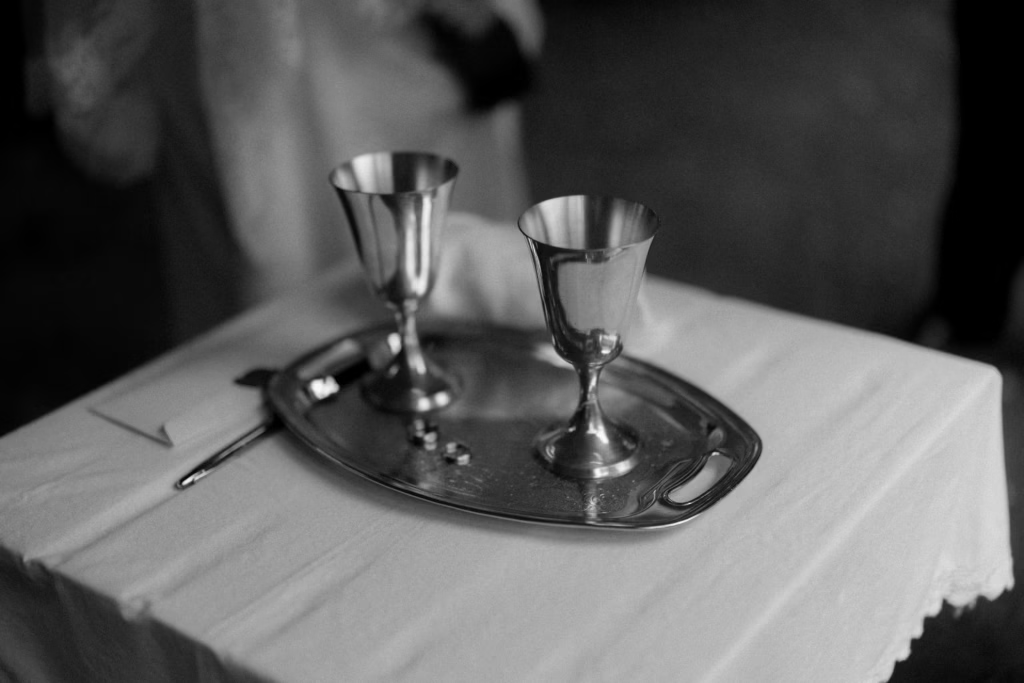
They may have been used to serve coffee, display glasses, or simply decorate a table.
Some models are made of genuine solid silver and can weigh several hundred grams or even more.
In this case, their value depends, in particular, on:
- based on their weight;
- their titration;
- their actual composition;
- and the price of silver at the time of the appraisal.
However, we must remain cautious.
Many antique trays are also made of silver-plated metal and have only a thin layer of silver on the surface.
A large, very heavy tray is therefore not automatically an item of great monetary value.
2. Antique spoons and forks
Household items and old tableware may also contain solid silver.
Spoons, forks, ladles, and other serving utensils may bear various hallmarks that identify their composition.
Even an incomplete service can still have value.
You don't need to have all twelve forks or all the original spoons to have the various pieces appraised.
When they are actually made of solid silver, their weight and fineness allow us to determine the amount of silver they contain.
3. Teapots and coffee pots
Antique tea and coffee sets are another particularly interesting category.
These include, among others:
- teapots;
- coffee makers;
- milk jugs;
- sugar bowls;
- small jars and assorted containers.
Some items may be made entirely of solid silver, while others are simply silver-plated.
Appearances alone are usually not enough to make a difference.
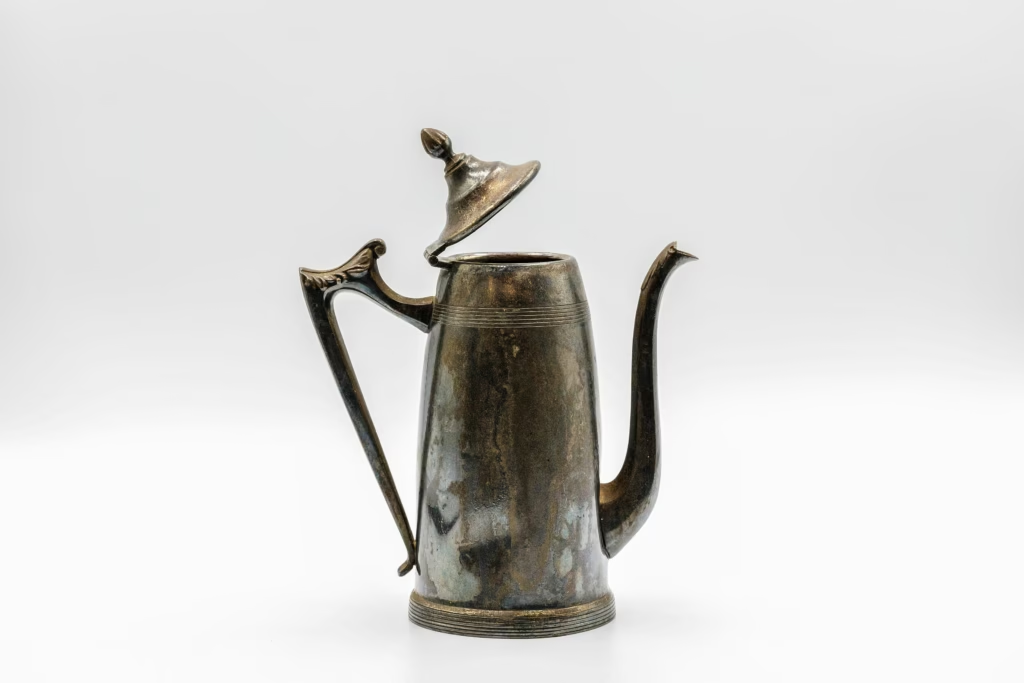
A highly polished and ornate object may be made of silver-colored metal, while an old teapot that has turned almost black may well contain a significant amount of silver.
4. Plates and bowls
Antique serving dishes, bowls, and small decorative plates can also be made of silver.
They were once commonly used in more upscale dining establishments.
As with trays, their size and weight can be misleading.
The key is to determine whether the object is actually made of a silver alloy throughout or is simply plated with silver.
5. Sugar bowls, milk jugs, and small table accessories
Small accessories are sometimes overlooked when clearing out a house.
However, an old sugar bowl, a small milk jug, or a decorative container could very well be made of solid silver.
Even if it weighs only a few tens or hundreds of grams, it may be worth checking its ingredients.
Before throwing away or giving away an old, incomplete set, take the time to check even the smallest pieces.
6. Silver jewelry
Jewelry is, of course, another common source of money.
These may include:
- chains;
- bracelets;
- rings;
- pendants;
- earrings;
- pins;
- medals.
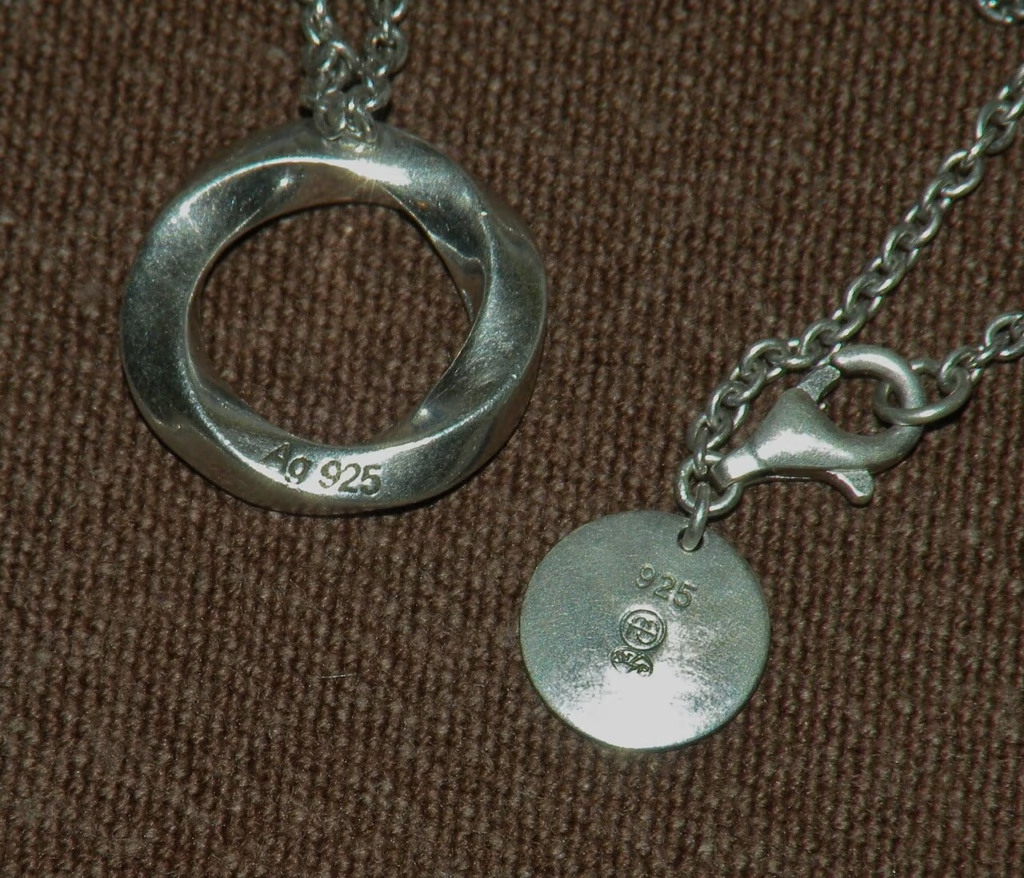
925 sterling silver jewelry is particularly common.
Even when a piece of jewelry is broken, misshapen, tarnished, or out of style, the silver it contains may still retain some value.
A bracelet with a broken clasp or an earring that’s lost its pair can still be appraised.
7. Old silver coins
Some ancient coins were also minted from alloys containing silver.
Of course, not all old coins are made of silver, and their silver content can vary considerably depending on the country, the period, and the type of coin.
Some coins may also have a numismatic value greater than their intrinsic metal value.
It is therefore best to identify them correctly before considering them solely for their silver content.
8. Decorative items
Some homes still contain many small antique decorative items.
These may include:
- boxes;
- executives;
- small vases;
- small bowls;
- religious objects;
- decorative items;
- silverware.
Some may contain solid silver, while others are made of various metals that are simply plated with silver.
When in doubt, it's better to have the item examined rather than relying solely on its appearance.
9. Candlesticks and candle holders: be mindful of their weight
Antique candlesticks and candleholders deserve special attention.
Some may indeed contain money, but their total weight can be misleading.
Depending on how they are manufactured, they may contain filling material, ballast, or other materials intended to make them more stable.
A candlestick weighing one kilogram does not, therefore, necessarily contain one kilogram of silver alloy.
You need to analyze its construction before estimating the actual amount of precious metal present.
Solid silver or silver-plated metal: How can you tell the difference?
That's often the main challenge.
A solid silver item and a silver-plated item may look almost identical.
In the case of silver-plated metal, the object’s structure consists of another metal covered with a thin layer of silver.
In the case of sterling silver, the item is made from an alloy containing a significant proportion of silver. The difference in value can therefore be considerable.
Look at the hallmarks
The first step is usually to look for any hallmarks.
They can be found:
- under a tray;
- on the back of an object;
- about a handful;
- under a spoon;
- on a piece of jewelry;
- in an inconspicuous area.
The markings 800, 835, 900, or 925 may indicate the fineness of silver.
But be careful: hallmarks vary by country and era.
The absence of a clearly identifiable number does not, therefore, automatically mean that the object is not made of silver.
Is a blackened object necessarily made of solid silver?
No.
Silver can naturally tarnish and turn gray or black when it reacts with certain compounds in its environment.
But silver-colored metal also contains silver on its surface and can therefore turn black as well.
Color is therefore a clue, but it alone is not enough to confirm that an object is made of solid silver.
What if the object has a coppery color?
Some older coins have red or copper-colored areas, particularly on the most worn parts.
In particular, this may indicate that an object is made of silver-colored metal and that the surface layer of silver has gradually worn away, revealing the metal underneath.
Again, this observation is an indication, but not conclusive proof.
Does weight tell us the value?
Weight is extremely important when the object is actually made of solid silver.
But it must always be used in conjunction with titration.
Let's take two objects, each weighing 1 kg.
An 800-silver object theoretically contains approximately:
1,000 g × 80% = 800 g of fine silver
A 925 silver object theoretically contains approximately:
1,000 g × 92.5% = 925 g of fine silver
For the same weight, the amount of fine silver in each is therefore different.
But before performing this calculation, we must, of course, confirm that the item is actually made of solid silver.
Can a damaged object still have value?
Yes.
When an object is valued primarily for the precious metal it contains, its appearance may be of secondary importance.
A silver object can be:
- blacken;
- struck through;
- distorted;
- old;
- incomplete;
- mismatched;
- or simply gone out of style.
The money it contains is still there.
Therefore, it is not necessary to restore an object before having it examined.
Should you clean your silverware before having it appraised?
No.
In fact, it's usually unnecessary.
A professional can examine an object even when it is heavily tarnished.
Furthermore, cleaning that is too harsh can damage certain surfaces, cause details to fade, or remove some of the silver plating on silver-plated metal.
If you just want to know how much your item is worth, simply bring it in as-is.
Before clearing out a house, check for any old items
This is especially important when:
- an inheritance;
- an estate;
- a move;
- a house clearance;
- decluttering a family home.
Many old items are sometimes given away or thrown away because they seem outdated or useless.
An old, completely black teapot, a few mismatched forks, or a tray that’s been forgotten for decades can still be worth some money.
An old object that seems unremarkable may sometimes contain a surprising amount of precious metal.
Could an old family set of silverware be valuable?
Yes.
But it is difficult to assign a value remotely without knowing the exact composition of the objects.
Two services that appear similar may have completely different values.
One may be made of 800 sterling silver, while the other is simply made of silver-plated metal.
The weight can also vary greatly.
That is why a physical appraisal remains the most reliable way to determine what you own.
How is the value of a silver item calculated?
When valuing an item primarily for its metal, several factors are taken into account.
The Composition
First, you need to determine whether the item is made of solid silver or not.
Titration
Next, you need to determine its silver content: 800, 835, 900, 925, or possibly another fineness.
Weight
The object is then weighed to determine the amount of metal it contains.
The Price of Silver
Finally, the price of silver at the time of the appraisal is factored into the calculation of its value.
This price fluctuates with market conditions, which means that the same item may have a different value depending on when it is appraised.
Don't throw something away just because you don't know its hallmark
It is common to come across objects with hallmarks that are difficult to read or inscriptions that are hard to understand.
You don't need to know how to interpret them yourself.
Above all, don't automatically rule out an item just because you don't immediately see “800” or “925.”
On some antique items, the markings may be subtle, worn, or different from those used today.
If in doubt, the simplest thing to do is to have the item examined.
What items should I bring for an appraisal?
In particular, you can bring:
- trays;
- forks and spoons;
- ladles and serving utensils;
- teapots;
- coffee makers;
- sugar bowls;
- milk jugs;
- dishes;
- cuts;
- jewelry;
- parts;
- small decorative items;
- other antique items that may contain silver.
You don't need to know in advance whether they're actually made of solid silver.
That is precisely the purpose of the analysis.
Get a free appraisal of your silver items
Have you found some antique silverware in a house, as part of an inheritance, or at the back of a closet?
At Agence de l’Or, our specialists can examine your items, verify their composition, and determine their value based on their silver content, weight, and the current market price.
The estimate is free and non-binding.
You can bring your items directly to one of our branches in Belgium:
Even if your items are old, black, mismatched, or if you don't understand their hallmarks, just bring them to the store.
Our teams will be able to verify the contents of your items and explain exactly what you own.
Key Takeaways
Gold protects your wealth during times of uncertainty.
It retains its value despite inflation.
Diversification enhances your security.
Physical gold gives you complete freedom.
Similar articles
800, 900, or 925 Silver: What Are the Differences, and Which Is Worth the Most?
Personalized advice at the branch
In addition to online purchases, our experts are available to meet with you at one of our branches in Belgium to help you with your investment plan: choosing the right investment vehicle, setting a budget, and developing a diversification strategy tailored to your goals.
This consultation is free and requires no commitment. Take advantage of our hands-on experience to invest with confidence, with the same level of transparency as you’d find online.
Frequently Asked Questions
Can I purchase precious metals online or only in person?
L’Agence de l’or offers you complete freedom. You can make your investment directly on our e-commerce website, or visit one of our branches in Belgium to receive in-person advice.
Do you provide certificates of authenticity with the products purchased?
Absolutely. Every bullion bar and investment coin we offer for sale is rigorously inspected and always comes with its official certificate of authenticity, guaranteeing its purity and provenance.
What documents do I need to provide to buy or sell gold?
For any financial transaction involving precious metals, the law requires an identity verification process known as KYC (Know Your Customer). Whether you’re confirming an online payment or selling an item in a store, you’ll be asked to provide a valid form of identification to ensure the transaction is secure.
Can I pick up my online order directly at the store?
Yes, if you'd prefer to avoid shipping, you can select "pick up in store" when you place your order. Your order will be prepared and made available securely at the location of your choice.