
Search
Categories
- Money News (7)
- Gold News (32)
- Precious Stones (4)
100% Secure Payment
Fast delivery within 24 hours*
Certified and Traceable Products
Belgian Company
Why does silver turn black? Is that a sign that it's real?
- October 6, 2026
- 2:12 p.m.
- Tom
- Share
Have you come across some old silverware, a tray, a teapot, or a piece of jewelry that used to be shiny but now has gray or black spots?
This is a very common phenomenon when it comes to money.
But one question comes up often: If an object turns black, does that necessarily mean it's real silver?
Not necessarily.
Tarnishing is indeed a characteristic of silver, but it is not enough to determine whether an object is made of solid silver or simply silver-plated metal.
To truly understand its composition and value, several factors must be considered.
Why does money turn black over time?
Contrary to popular belief, money does not rust like iron.
However, its surface can react with certain compounds present in the air and in its environment, particularly those containing sulfur.
This reaction gradually causes a thin, dark layer to form on the surface of the metal, consisting mainly of silver sulfide.
This phenomenon is generally referred to as the tarnishing of silver.
At first, the object may simply lose its luster. Then its surface may become:
- slightly yellow;
- gray;
- brownish;
- and, in the end, almost black.
This change in appearance can occur gradually over several years or much more quickly, depending on storage conditions.
Why do some objects turn black faster than others?
Not all silver items tarnish at the same rate.
Several factors can accelerate this process.
Moisture, certain chemicals, air pollution, and contact with certain materials can cause tarnishing.
Silver jewelry can also react when it comes into contact with skin, sweat, certain cosmetics, or perfumes.
When it comes to silverware, the conditions under which the items are stored also play a role.
A tray that has been stored in a cabinet for several decades may therefore have a color that is very different from what it looked like when it was in regular use.
If an object turns black, does that necessarily mean it's made of solid silver?
No.
That's probably the most important point to remember.
The fact that an object turns black may indicate the presence of silver on its surface, but it does not prove that the object is made entirely of a silver alloy.
A silver-colored metal object also has a layer of silver on its surface.
This plating can therefore tarnish just like that of a solid silver object.
Two objects can thus appear equally blackened even though their precious metal content is completely different.
Sterling silver and silver-plated metal: What's the difference?
A solid silver object is made of an alloy containing a significant proportion of silver.
In particular, we find titles such as:
800: 80% silver
835: 83.5% silver
900: 90% silver
925: 92.5% silver
The rest of the alloy is generally composed of other metals intended to improve the object's strength.
A silver-colored metal object works differently.
Its main structure consists of a less precious metal coated with a thin layer of silver.
The difference in the amount of money involved can therefore be very significant.
That is why a large silver-plated metal tray may have a precious metal value that is significantly lower than that of a smaller solid-silver tray.
Does discoloration help identify real silver?
Tarnishing may be a sign, but it is not a reliable test on its own.
The color of an object depends on many factors: its alloy, its age, how well it has been cared for, how it has been used, and its environment.
It is therefore not advisable to conclude that an object is made of solid silver simply because it has turned black.
Conversely, a perfectly shiny object may also be made of real silver if it has been recently cleaned or properly cared for.
Can hallmarks help identify silver?
Yes.
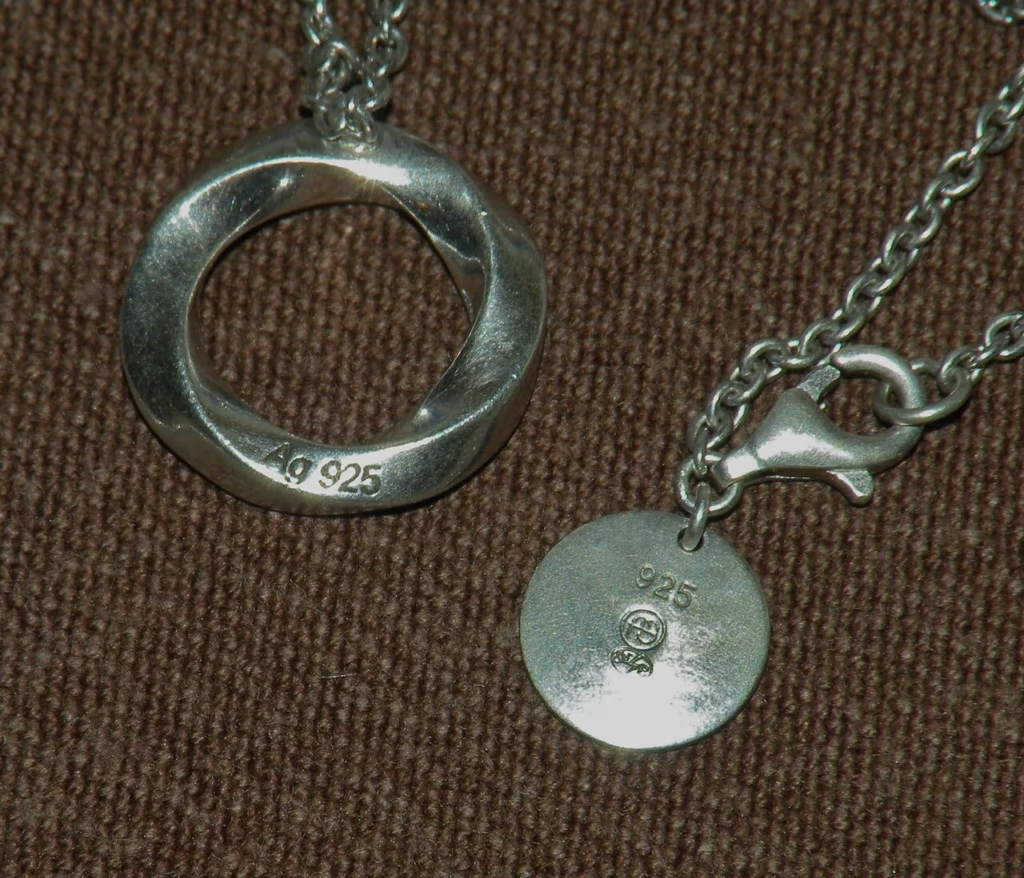
Hallmarks are one of the first things to look for when trying to identify a silver object.
In particular, you can find figures such as:
800, 835, 900, or 925.
These numbers generally indicate the fineness of the silver, expressed in parts per thousand.
A " 925 " mark thus indicates an alloy that theoretically contains 925 thousandths of silver, or 92.5 percent.
Other hallmarks may also be present, depending on the country of origin, the period, or the manufacturer.
However, we must remain cautious.
Punching systems have evolved over time, and worn or hard-to-read markings can be misinterpreted.
A hallmark is therefore an important piece of information, but it may be necessary to supplement it with other checks.
Can an item without a hallmark still be made of silver?
Yes.
The absence of a visible hallmark is not sufficient grounds to conclude that an object is not made of silver.
On some antique items, the markings may be very faint or heavily worn.
It may also be located in a spot that is not easily visible: under a tray, on the edge of a lid, or near a handle.
When there is any doubt, a professional can perform various tests to determine the nature of the metal more precisely.
Why do some silver objects develop a coppery patina?
Sometimes an old tray, piece of tableware, or decorative object may have a reddish or coppery color in certain places.
This can happen, for example, on a silver-colored metal object.
As the surface layer of silver wears away over time, the metal underneath may begin to show through.
Depending on the object's composition, this lower layer may have a copper-like color.
That's an interesting clue, but again, appearance alone isn't enough to determine an object's composition with certainty.
Should you clean the money before having it appraised?
That's not necessary.
Even if an object is heavily soot-stained, a professional can usually examine it and determine its composition.
It may even be best not to perform any aggressive cleaning before the appraisal.
Certain abrasive products or harsh cleaning methods can:
- scratch the surface;
- remove some of the silver plating;
- damage certain finishes;
- damage the details or hallmarks of an antique object.
If your goal is simply to find out the value of the item, bring it in as-is.
Can baking soda be used to clean silver?
There are many home remedies circulating on the Internet: baking soda, aluminum foil, lemon, toothpaste, or chemicals.
Some can indeed change the appearance of an object, but they aren't suitable for every room.
On an antique, decorated, or simply silver-plated object, cleaning that is too harsh can cause irreversible damage.
It is therefore best to exercise caution, especially when you do not yet know the exact nature of the object.
Does a blackened object lose its value?
Not necessarily.
When an object is valued primarily for the silver it contains, surface tarnish does not cause the precious metal to disappear.
An 800 silver tray is made of the same alloy whether it is perfectly polished or completely blackened.
For a material-based estimate, the most important factors are primarily:
- the composition;
- titration;
- weight;
- the actual amount of money;
- and the price of silver at the time of the appraisal.
However, the item’s aesthetic condition may be more important when it has special value as an antique, decorative item, or collectible.
What silver items can be appraised?
Many antique items may contain silver, including:
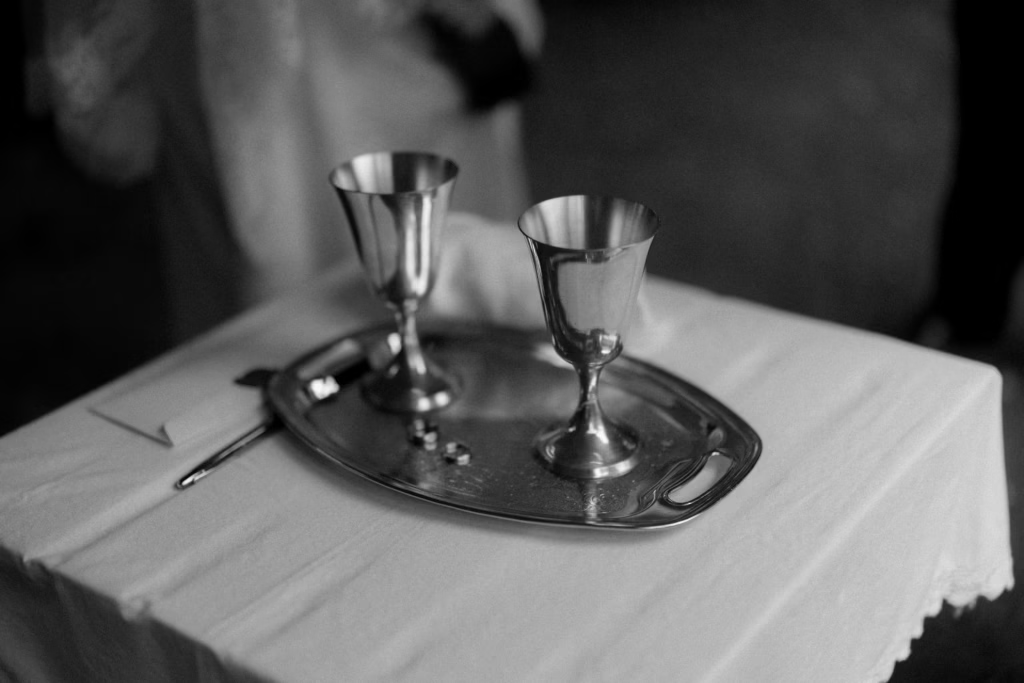
- the trays;
- cutlery, except for knives;
- teapots;
- coffee makers;
- sugar manufacturers;
- the dishes;
- the cuts;
- certain candlesticks;
- jewelry;
- silver coins;
- and various tableware items.
When you come across several items while settling an estate or moving, you don't need to know which ones are made of silver.
They can be examined individually to determine their composition.
How can you determine the value of a silver object?
Value cannot be determined solely by observing its color.
For a solid silver object, it is particularly important to know its weight and fineness.
For example, a 1-kg object made of 800 silver does not contain the same amount of fine silver as a 1-kg object made of 925 silver.
The price of silver is then factored into the estimate.
As with gold, this price fluctuates on the markets. The value of a given item can therefore vary over time.
That is why a professional appraisal remains the best way to determine the exact value of your silverware.
Why can tarnished silver hide a wonderful surprise?
Many items sit in closets for years simply because they look old or worn.
Their owner may think they no longer have any value because of their appearance.
However, beneath this dark layer there may be an object containing a significant amount of money.
An old tray, a set of cutlery, or a family dinner set may therefore be worth taking a closer look at before giving it away, throwing it out, or selling it as a mere decorative item.
So a blackened object isn't necessarily worthless.
Have your silver items appraised for free
Have you found a platter, some cutlery, a dinner set, or an antique item that has turned black over time?
At Agence de l’Or, our specialists can examine your items, verify their composition, and determine whether they are made of sterling silver or silver-plated metal.
The estimate is free and non-binding.
You can bring your items directly to one of our branches in Belgium:
You don't need to clean your items or know their fineness before your visit.
Simply bring them to one of our branches: we can verify their composition, weight, and value based on the current silver price.
Key Takeaways
Gold protects your wealth during times of uncertainty.
It retains its value despite inflation.
Diversification enhances your security.
Physical gold gives you complete freedom.
Similar articles
800, 900, or 925 Silver: What Are the Differences, and Which Is Worth the Most?

Personalized advice at the branch
In addition to online purchases, our experts are available to meet with you at one of our branches in Belgium to help you with your investment plan: choosing the right investment vehicle, setting a budget, and developing a diversification strategy tailored to your goals.
This consultation is free and requires no commitment. Take advantage of our hands-on experience to invest with confidence, with the same level of transparency as you’d find online.
Frequently Asked Questions
Can I purchase precious metals online or only in person?
L’Agence de l’or offers you complete freedom. You can make your investment directly on our e-commerce website, or visit one of our branches in Belgium to receive in-person advice.
Do you provide certificates of authenticity with the products purchased?
Absolutely. Every bullion bar and investment coin we offer for sale is rigorously inspected and always comes with its official certificate of authenticity, guaranteeing its purity and provenance.
What documents do I need to provide to buy or sell gold?
For any financial transaction involving precious metals, the law requires an identity verification process known as KYC (Know Your Customer). Whether you’re confirming an online payment or selling an item in a store, you’ll be asked to provide a valid form of identification to ensure the transaction is secure.
Can I pick up my online order directly at the store?
Yes, if you'd prefer to avoid shipping, you can select "pick up in store" when you place your order. Your order will be prepared and made available securely at the location of your choice.