
Search
Categories
- Money News (5)
- Gold News (31)
- Precious Stones (4)
100% Secure Payment
Fast delivery within 24 hours*
Certified and Traceable Products
Belgian Company
Selling an inherited gold item: How do you determine its true value?
- March 23, 2026
- 11:09 a.m.
- Tom
- Share
Inheriting a piece of jewelry or a gold item often raises an important question:
How much is it really worth?
Between illegible hallmarks, broken jewelry, very old items, and pieces of unknown origin, it’s normal not to know how to appraise a gold inheritance on your own.
Good news: what you own could be worth much more than you realize.
In this guide, experts from Agence de l’Or explain how to determine the true value of an inheritance, which items can be sold, and how to avoid common pitfalls.
Which inherited items might be worth their weight in gold?
Contrary to popular belief, almost anything containing gold can be worth a significant amount, even if the item is badly damaged.
Here are the items families most often bring:
- Rings (even if broken or bent)
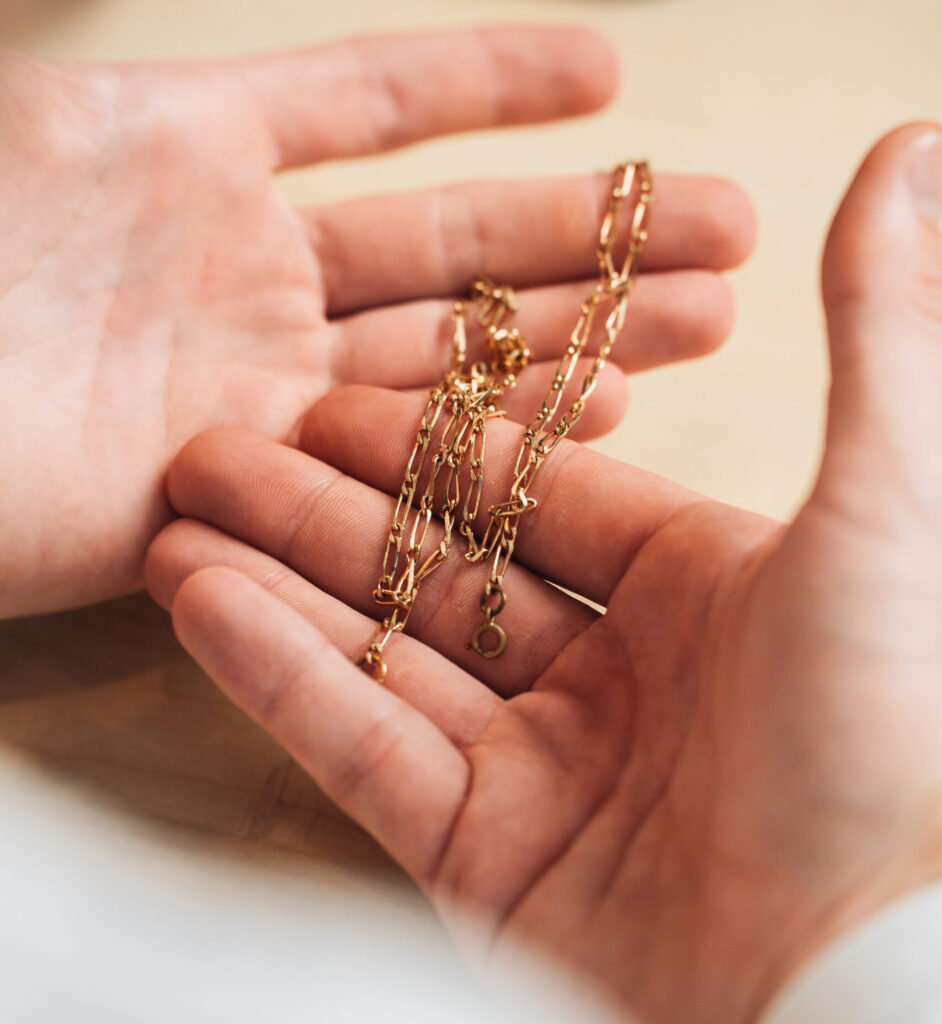
- Necklaces, necklaces, bracelets
- Religious medals or antique souvenirs
- Parts and blanks
- Vintage brooches and jewelry
- Cufflinks
- Old eyeglass frames
- Broken gold, loose gold
- Antique gold crowns and dentures (without teeth)
Even a piece of jewelry in very poor condition can be worth a lot: the only things that matter are the weight and the carat.
Solid gold, gold-plated, vermeil… how can you tell the difference?
Many people inherit gold items… but they aren’t necessarily made of solid gold.
To determine their true value, you first need to identify the type of metal.
✔ Solid gold
It is the most sought-after precious metal.
You can identify solid gold by its hallmarks:
- 750 → 18K gold
- 585 → 14K gold
- 375 → 9K gold
The higher the karat, the more pure gold the jewelry contains.
Typical signs:
- Even color
- No discoloration in high-wear areas
- Clear hallmark
✔ Gold-plated (no resale value)
Very common in heirlooms.
It is a base metal coated with a very thin layer of gold.
Clues:
- Hallmarks: “GP,” “GEP,” “Plated,” “Gold Filled”
- Copper or silver patina
- Very yellow color
- Lightweight
Gold-plated jewelry has a buyback value of €0.
✔ Vermeil
A silver object plated with gold.
Signs:
- Silver hallmark: 925, “Sterling,” head of Minerva
- A slightly silvery hue along the edges
- Yellow less vivid than 18K gold
Value: ✔ Yes; but significantly lower than solid gold.
Why should an inheritance of gold be evaluated by a professional?
Because only an expert can determine the exact carat weight, identify fakes, low-quality alloys, plated items, or non-precious metals.
At Agence de l’Or, we use reliable methods:
Spectrometer analysis (100% accurate)
Allows you to determine the exact composition: gold, silver, palladium, copper, etc.
Magnetic test
Gold is a non-ferrous metal, which means it is not magnetic.
If an object reacts to a magnet, it is therefore not solid gold.
However, the reverse is not always true:
Non-magnetic jewelry is not necessarily made of gold.
Many non-precious metals, such as copper, aluminum, or certain alloys, are also non-magnetic.
Test stone + acids
Traditional method for determining carat weight.
Everything happens right in front of you, free of charge, and with complete transparency.
How much will a gold inheritance be worth in 2026?
The value depends on three key factors:
Weight
The heavier it is, the more valuable it is.
Carat (purity)
18K → highest value
4K → intermediate
9K → lowest
Today's gold price
A deliberately simple and reassuring estimate
Inheriting a gold item is often an emotional experience.
Many families simply want to “find out” its value, without necessarily selling it.
At Agence de l’Or, we:
✔ We provide a free analysis
✔ We clearly explain each result
✔ We don’t pressure you to sell
✔ We pay you quickly if you decide to sell your gold
You're free from start to finish.
When is a gold inheritance worthless?
For the sake of transparency, here are the most common cases:
- Gold-plated jewelry
- Novelty items
- Non-precious yellow metal
- Gold-plated frames
- Antique jewelry without a hallmark + tested negative
- Very low-karat gold (alloy too low in gold content)
That is precisely why a professional analysis is essential.
Get your inheritance assessed for free
Have you inherited jewelry or gold items?
Would you like to find out their value with no obligation?
Just stop by the branch.
At Agence de l’Or, we offer free appraisals for:
✔ Antique jewelry (broken or intact)
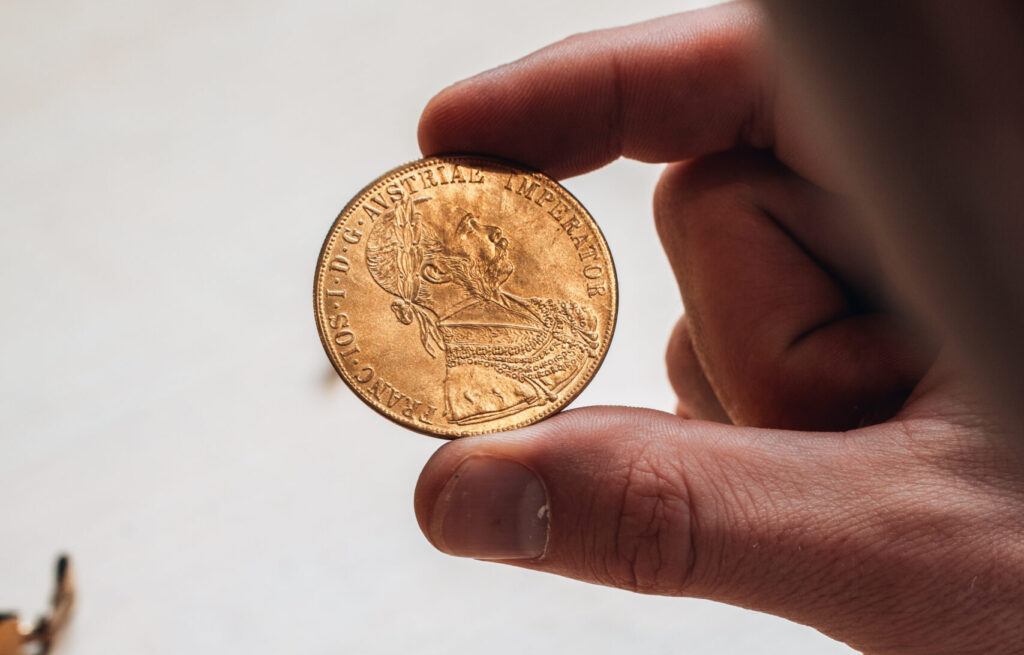
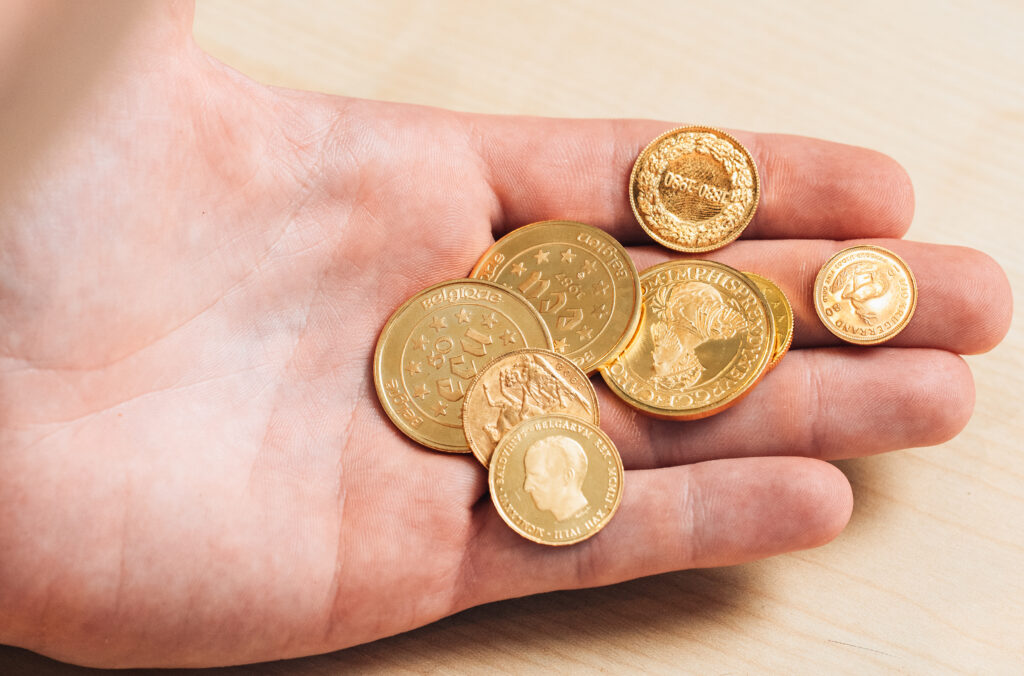
✔ Coins and bars
✔ Dental gold (without teeth)
✔ Bulk or unidentified gold
✔ Entire estates
No appointment needed
Fast payment!
Today's price guaranteed
Come discover the true value of your inheritance—free of charge and with complete confidence.
Key Takeaways
Gold protects your wealth during times of uncertainty.
It retains its value despite inflation.
Diversification enhances your security.
Physical gold gives you complete freedom.
Similar articles
Personalized advice at the branch
In addition to online purchases, our experts are available to meet with you at one of our branches in Belgium to help you with your investment plan: choosing the right investment vehicle, setting a budget, and developing a diversification strategy tailored to your goals.
This consultation is free and requires no commitment. Take advantage of our hands-on experience to invest with confidence, with the same level of transparency as you’d find online.
Frequently Asked Questions
Can I purchase precious metals online or only in person?
L’Agence de l’or offers you complete freedom. You can make your investment directly on our e-commerce website, or visit one of our branches in Belgium to receive in-person advice.
Do you provide certificates of authenticity with the products purchased?
Absolutely. Every bullion bar and investment coin we offer for sale is rigorously inspected and always comes with its official certificate of authenticity, guaranteeing its purity and provenance.
What documents do I need to provide to buy or sell gold?
For any financial transaction involving precious metals, the law requires an identity verification process known as KYC (Know Your Customer). Whether you’re confirming an online payment or selling an item in a store, you’ll be asked to provide a valid form of identification to ensure the transaction is secure.
Can I pick up my online order directly at the store?
Yes, if you'd prefer to avoid shipping, you can select "pick up in store" when you place your order. Your order will be prepared and made available securely at the location of your choice.