
Search
Categories
- Money News (5)
- Gold News (31)
- Precious Stones (4)
100% Secure Payment
Fast delivery within 24 hours*
Certified and Traceable Products
Belgian Company
Gemstones: How Can You Tell If They're Valuable?
- June 29, 2026
- 2:44 p.m.
- Tom
- Share
Do you own a ring with a diamond, a pendant set with a ruby, or a piece of antique jewelry featuring a colored gemstone?
One question comes up often:
How can you tell if a gemstone is valuable?
Unlike gold, whose price is determined daily by market rates, the value of a gemstone depends on many factors. Two gemstones that appear identical can sometimes differ significantly in value.
Here's what you need to know before having a piece of jewelry containing gemstones appraised or sold.
What is a gemstone?
Traditionally, only four stones are considered gemstones:
- The Diamond
- The Ruby
- Sapphire
- The Emerald
All other gemstones are generally classified as semi-precious stones.
These stones are particularly sought after because of their rarity, beauty, and durability.
Are all gemstones valuable?
No.
The presence of a gemstone in a piece of jewelry does not automatically guarantee that it is valuable.
Several factors directly influence its price:
- its weight;
- its color;
- its purity;
- its size;
- its origin;
- its condition;
- whether a certificate is present.
That is why an expert assessment is often necessary.
Are diamonds always the most expensive gemstones?
Many people believe that the diamond is always the most precious gemstone.
In fact, some particularly rare rubies, sapphires, or emeralds can be worth more than many diamonds.
Rarity remains one of the most important criteria in evaluating a gemstone.
Why can two identical stones have very different values?
At first glance, two stones may look identical.
However, several factors can significantly influence their value:
Color
The more intense and uniform the color, the more sought-after the stone is.
Purity
Visible inclusions and imperfections can reduce a stone's value.
Weight
Weight is measured in carats.
A heavier stone is generally rarer.
The Quality of the Cut
A high-quality cut enhances the stone's brilliance and beauty.
Natural, synthetic, or imitation stones: What's the difference?
Today, there are several categories of gemstones.
Natural Stones
They are formed naturally deep within the Earth.
These are generally the most sought-after.
Synthetic stones
They are created in a laboratory but have the same chemical properties as natural stones.
Their value is generally lower.
Imitations
Some stones simply mimic the appearance of a gemstone without possessing its characteristics. This is particularly true of certain zircons or cut glass.
Can you tell the value of a gemstone just by looking at it?
In most cases, no.
Even for an experienced professional, in-depth expertise is often required to determine:
- the exact nature of the stone;
- its weight;
- its quality;
- its authenticity;
- its potential value.
This is especially true for diamonds and high-value gemstones.
What happens to the gemstones when gold is bought back?
Much of the jewelry brought into the store contains gemstones.
During an assessment, it is important to distinguish between:
✔ the value of the precious metal;
✔ the potential value of the stones.
Some stones may have intrinsic value, while others are primarily decorative. Each piece of jewelry must therefore be evaluated on its own merits.
How do you have a gemstone appraised?
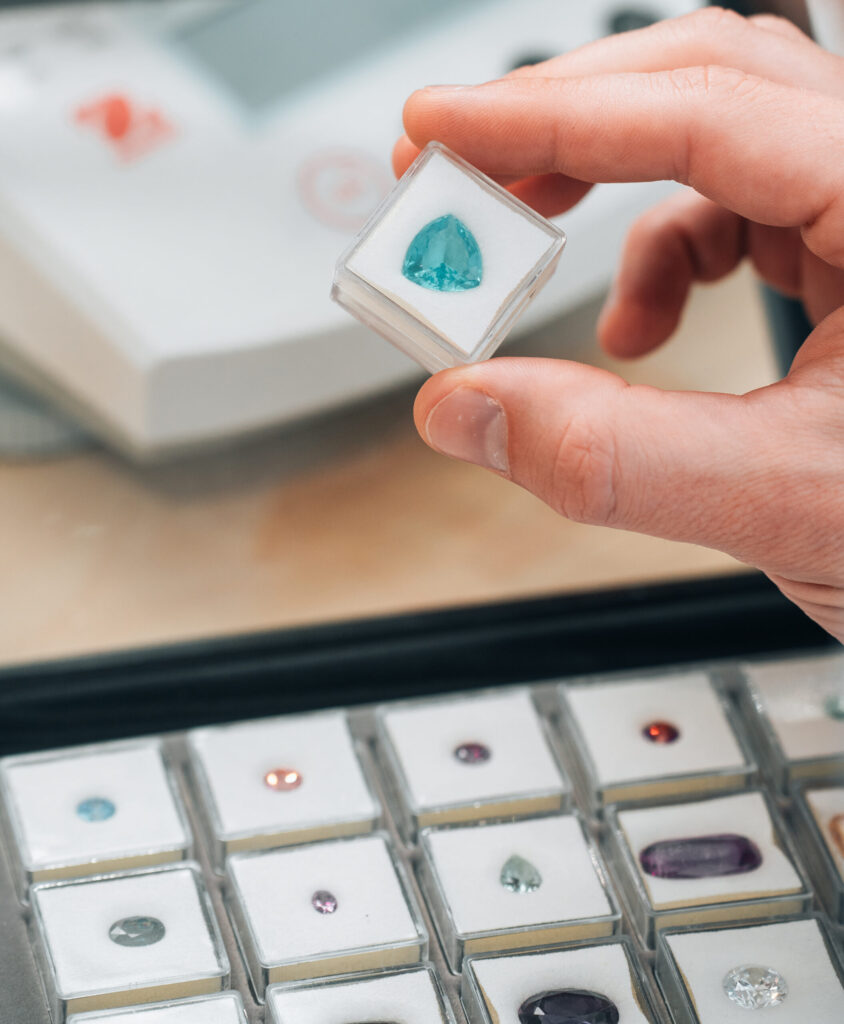
The appraisal of a gemstone is generally based on:
- observation with a magnifying glass;
- weighing;
- color analysis;
- checking for inclusions;
- the search for a possible certificate.
This analysis provides a much more reliable estimate than simple at-home tests.
How can you find out the true value of your jewelry?
Do you own a piece of jewelry set with a diamond, ruby, sapphire, or emerald?
The experts at Agence de l’Or welcome you to our offices in:
We provide a free, no-obligation appraisal of your gold jewelry and assist you in analyzing its composition.
Key Points to Remember About the Value of Gemstones
Not all gemstones are of equal value. Weight, color, clarity, cut, origin, and the presence of a certificate can all have a significant impact on their price.
Whether you own a diamond, a ruby, a sapphire, or an emerald, the best course of action is to have it professionally appraised to obtain a reliable and transparent valuation.
Key Takeaways
Gold protects your wealth during times of uncertainty.
It retains its value despite inflation.
Diversification enhances your security.
Physical gold gives you complete freedom.
Similar articles
Personalized advice at the branch
In addition to online purchases, our experts are available to meet with you at one of our branches in Belgium to help you with your investment plan: choosing the right investment vehicle, setting a budget, and developing a diversification strategy tailored to your goals.
This consultation is free and requires no commitment. Take advantage of our hands-on experience to invest with confidence, with the same level of transparency as you’d find online.
Frequently Asked Questions
Can I purchase precious metals online or only in person?
L’Agence de l’or offers you complete freedom. You can make your investment directly on our e-commerce website, or visit one of our branches in Belgium to receive in-person advice.
Do you provide certificates of authenticity with the products purchased?
Absolutely. Every bullion bar and investment coin we offer for sale is rigorously inspected and always comes with its official certificate of authenticity, guaranteeing its purity and provenance.
What documents do I need to provide to buy or sell gold?
For any financial transaction involving precious metals, the law requires an identity verification process known as KYC (Know Your Customer). Whether you’re confirming an online payment or selling an item in a store, you’ll be asked to provide a valid form of identification to ensure the transaction is secure.
Can I pick up my online order directly at the store?
Yes, if you'd prefer to avoid shipping, you can select "pick up in store" when you place your order. Your order will be prepared and made available securely at the location of your choice.